
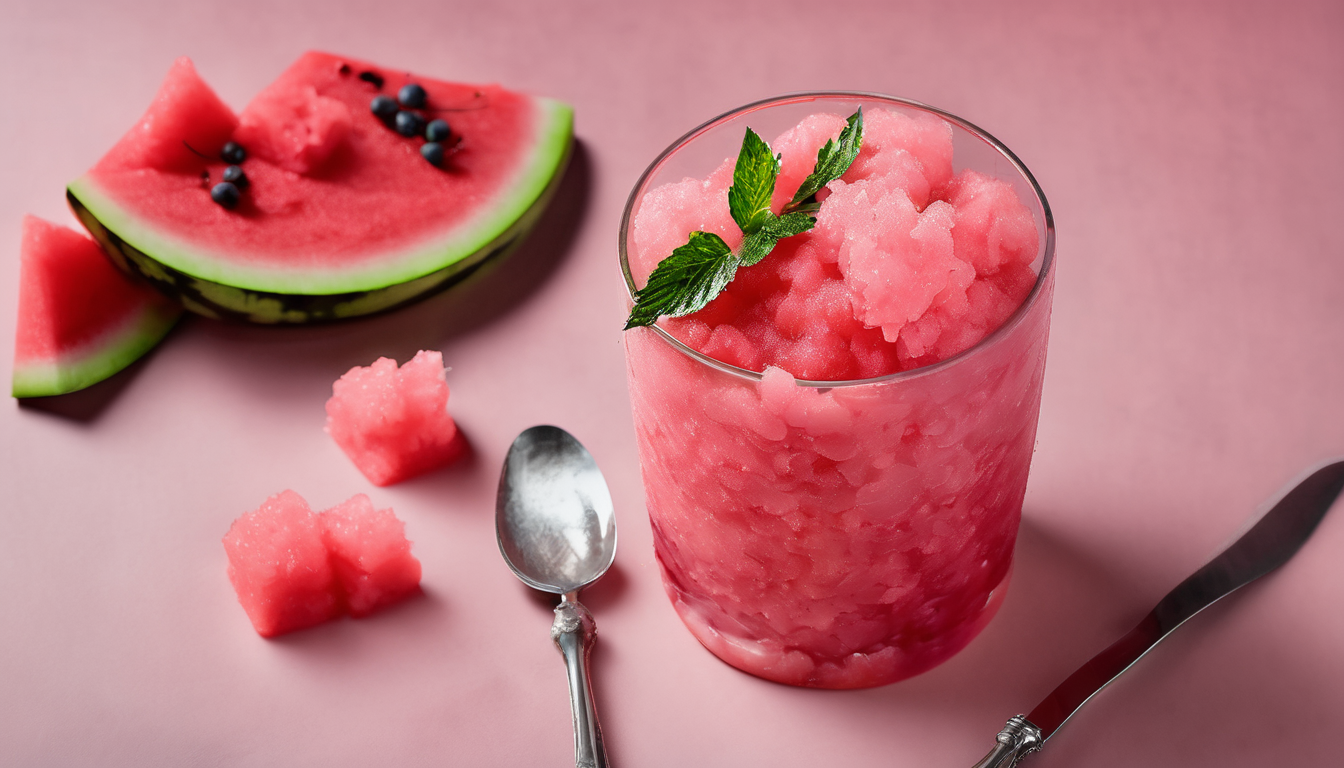
Choosing the right watermelon
For a refreshing and flavorful watermelon granita, selecting the right watermelon is essential. The quality of your fruit will directly impact the sweetness, texture, and overall taste of the final dish. Here are some key tips to help you choose the best watermelon for your granita:
- Look for a uniform shape: Choose a watermelon that is symmetrical and free from irregular bumps or dents. An even shape indicates consistent ripening and good growing conditions.
- Check the field spot: The creamy yellow spot on the underside of the watermelon, known as the field spot, shows where it rested on the ground. A deep yellow or golden field spot is a sign of ripeness, while a white or pale spot suggests the fruit was picked too early.
- Tap for a hollow sound: Gently tap the watermelon with your knuckles. A ripe watermelon will produce a deep, hollow sound, indicating that it is full of juice and ready to eat.
- Inspect the skin: The rind should be dull rather than shiny, which is another indicator of ripeness. Avoid watermelons with cuts, bruises, or soft spots.
- Feel the weight: A ripe watermelon should feel heavy for its size, which means it has a high water content—perfect for making granita.
Seedless watermelons are ideal for granita, as they save time during preparation and ensure a smoother texture. However, if you prefer a seeded variety, be sure to remove all seeds before blending. Always choose a watermelon that is in season and locally grown when possible, as it will offer the best flavor and sweetness for your granita.
Step-by-step preparation
Once you’ve selected the perfect watermelon, it’s time to transform it into a refreshing granita. This simple, no-cook recipe requires minimal ingredients and delivers maximum flavor. Here’s how to prepare it:
- Ingredients:
- 4 cups cubed seedless watermelon (about 1 small watermelon)
- 2 tablespoons freshly squeezed lime juice
- 2 tablespoons granulated sugar (adjust to taste)
- Pinch of salt
- Optional: 1 tablespoon chopped fresh mint or basil for added flavor
Instructions:
- Step 1: Prepare the watermelon. Cut the watermelon into cubes, removing any seeds if necessary. Measure out 4 cups of fruit and place them in a blender or food processor.
- Step 2: Blend the mixture. Add the lime juice, sugar, and a pinch of salt to the blender. If using herbs, add them now. Blend until the mixture is completely smooth. Taste and adjust the sweetness or acidity as needed.
- Step 3: Strain (optional). For an ultra-smooth texture, pour the blended mixture through a fine mesh sieve into a shallow baking dish. This step is optional but recommended if you prefer a silkier granita.
- Step 4: Freeze and scrape. Place the dish in the freezer. After 30–45 minutes, use a fork to scrape the icy edges toward the center. Repeat this scraping process every 30 minutes for about 3–4 hours, or until the entire mixture has formed light, fluffy ice crystals.
- Step 5: Fluff and serve. Before serving, give the granita one final scrape to break up any large ice chunks. The texture should be granular and airy, similar to shaved ice.
For best results, use a metal baking dish, which conducts cold more efficiently and speeds up the freezing process. Be patient with the scraping—it’s what gives granita its signature texture. If you forget to scrape and the mixture freezes solid, simply let it sit at room temperature for 10–15 minutes, then scrape with a fork to restore the texture.
Serving and storage tips
Watermelon granita is best enjoyed fresh, but with the right storage techniques, you can preserve its texture and flavor for a few days. When serving, timing and presentation can elevate this simple dessert into a show-stopping treat.
- Serving tips:
- Serve the granita in chilled glasses or bowls to prevent it from melting too quickly. Martini glasses, coupe glasses, or small dessert bowls work beautifully for presentation.
- Garnish with a sprig of fresh mint, a twist of lime zest, or a few small watermelon balls for added visual appeal and a burst of complementary flavor.
- For a more indulgent twist, top the granita with a dollop of whipped cream or a scoop of vanilla yogurt.
- If serving at a gathering, portion the granita into individual cups and keep them in the freezer until just before serving to maintain the ideal texture.
- Storage tips:
- Store leftover granita in an airtight container in the freezer. A shallow container is best, as it allows for easier scraping and fluffing later.
- To maintain the granita’s light, flaky texture, re-scrape it with a fork before serving. If it has frozen solid, let it sit at room temperature for 10–15 minutes to soften slightly before fluffing.
- Granita is best consumed within 3–4 days. After that, ice crystals may become too large and the flavor may diminish.
- Avoid storing granita near strong-smelling foods in the freezer, as it can absorb odors. Use a well-sealed container to preserve its fresh, fruity aroma.
Whether you’re serving it as a light dessert after a summer meal or as a refreshing palate cleanser between courses, watermelon granita is a versatile and crowd-pleasing option. With proper storage and a few thoughtful garnishes, it can be just as delightful on day three as it was fresh from the freezer.