
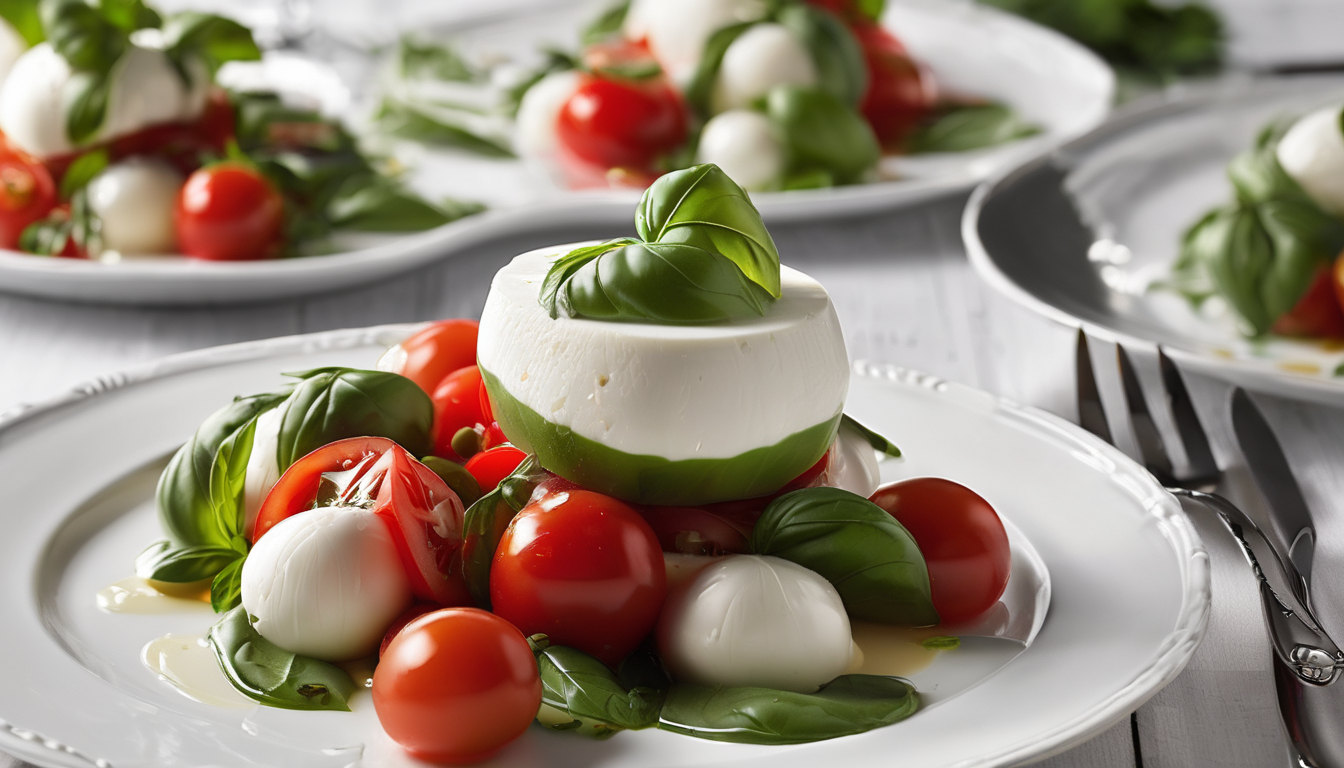
Ingredients and preparation
Caprese Salad is a simple yet elegant Italian dish that highlights the freshness of its ingredients. To prepare an authentic Caprese Salad, it is essential to use high-quality, fresh produce and traditional Italian staples. Below is a list of ingredients followed by step-by-step preparation instructions and helpful culinary tips.
Ingredients:
- 3–4 ripe tomatoes (preferably heirloom or vine-ripened)
- 200g fresh mozzarella (buffalo mozzarella or fior di latte)
- Fresh basil leaves (a small handful)
- Extra virgin olive oil (2–3 tablespoons)
- Sea salt (to taste)
- Freshly ground black pepper (optional)
- Balsamic glaze (optional, for drizzling)
Preparation:
- Wash and dry the tomatoes and basil leaves thoroughly.
- Slice the tomatoes into 1 cm thick rounds using a sharp knife to avoid crushing them.
- Slice the mozzarella into similar-sized rounds. If the mozzarella is packed in water, gently pat it dry with a paper towel to prevent excess moisture on the plate.
- On a serving platter, alternate slices of tomato and mozzarella in a circular or linear pattern, slightly overlapping each piece.
- Tuck whole basil leaves between the layers of tomato and mozzarella for both flavor and visual appeal.
- Drizzle the salad generously with extra virgin olive oil just before serving.
- Season with sea salt to enhance the natural flavors. Add freshly ground black pepper if desired.
- Optionally, finish with a light drizzle of balsamic glaze for a touch of sweetness and acidity.
Cooking Tips:
- Use tomatoes at room temperature for the best flavor and texture.
- Choose mozzarella that is soft and creamy; avoid pre-shredded or low-moisture varieties.
- Fresh basil should be added at the last moment to prevent wilting.
- For a more rustic presentation, tear the mozzarella and basil by hand instead of slicing.
- If using balsamic vinegar instead of glaze, reduce it in a saucepan over low heat until thickened to avoid overpowering the salad.
History and origin
Caprese Salad, or Insalata Caprese in Italian, traces its roots to the sun-drenched island of Capri, located in the Campania region of southern Italy. This iconic dish is believed to have originated in the early 20th century, though its exact beginnings remain somewhat anecdotal. One popular theory suggests that it was created as a patriotic tribute to the Italian flag, with the red of the tomatoes, white of the mozzarella, and green of the basil representing the national colors.
Initially, Caprese Salad was a simple offering served in local trattorias and seaside cafés, often enjoyed as a light antipasto during the warm summer months. It gained popularity among tourists visiting the Amalfi Coast, who were drawn to its fresh flavors and vibrant presentation. Over time, the dish spread beyond the borders of Capri and became a staple in Italian cuisine, celebrated for its minimalism and reliance on high-quality ingredients.
In the post-World War II era, Caprese Salad began appearing on menus across Italy and eventually around the world, especially as Italian cuisine gained international acclaim. Its rise in popularity coincided with a broader appreciation for Mediterranean diets, which emphasize fresh vegetables, olive oil, and simple preparations. Today, Caprese Salad is not only a symbol of Italian culinary tradition but also a testament to the elegance of uncomplicated, ingredient-driven cooking.
Variations and serving suggestions
While the traditional Caprese Salad is a timeless classic, there are numerous variations that allow chefs and home cooks alike to adapt the dish to different tastes, seasons, and occasions. These creative twists maintain the essence of the original while introducing new textures and flavors.
Popular Variations:
- Caprese Skewers: Perfect for parties or appetizers, this version involves threading cherry tomatoes, mini mozzarella balls (bocconcini), and fresh basil leaves onto small skewers. Drizzle with olive oil and balsamic glaze just before serving.
- Grilled Caprese: Grilling thick slices of tomato and mozzarella adds a smoky depth to the salad. Serve warm with fresh basil and a splash of olive oil.
- Avocado Caprese: Add slices of ripe avocado for a creamy texture and a boost of healthy fats. This variation pairs especially well with a squeeze of lemon juice or a sprinkle of chili flakes.
- Caprese Pasta Salad: Combine cooked and cooled pasta with chopped tomatoes, mozzarella cubes, and torn basil. Toss with olive oil and a touch of balsamic vinegar for a hearty, picnic-ready dish.
- Caprese with Pesto: Replace or complement the olive oil with a spoonful of fresh basil pesto for a more intense herbal flavor.
Serving Suggestions:
- Serve Caprese Salad as a starter or side dish alongside grilled meats, seafood, or crusty bread.
- For a more substantial meal, layer the salad over a bed of arugula or mixed greens and top with toasted pine nuts or prosciutto.
- Use heirloom tomatoes of different colors and shapes to create a visually stunning presentation.
- Chill the salad for 10–15 minutes before serving on hot days, but avoid refrigerating for too long to preserve the texture and flavor of the tomatoes and mozzarella.
- Pair with a crisp white wine such as Pinot Grigio or a light rosé to complement the freshness of the ingredients.