
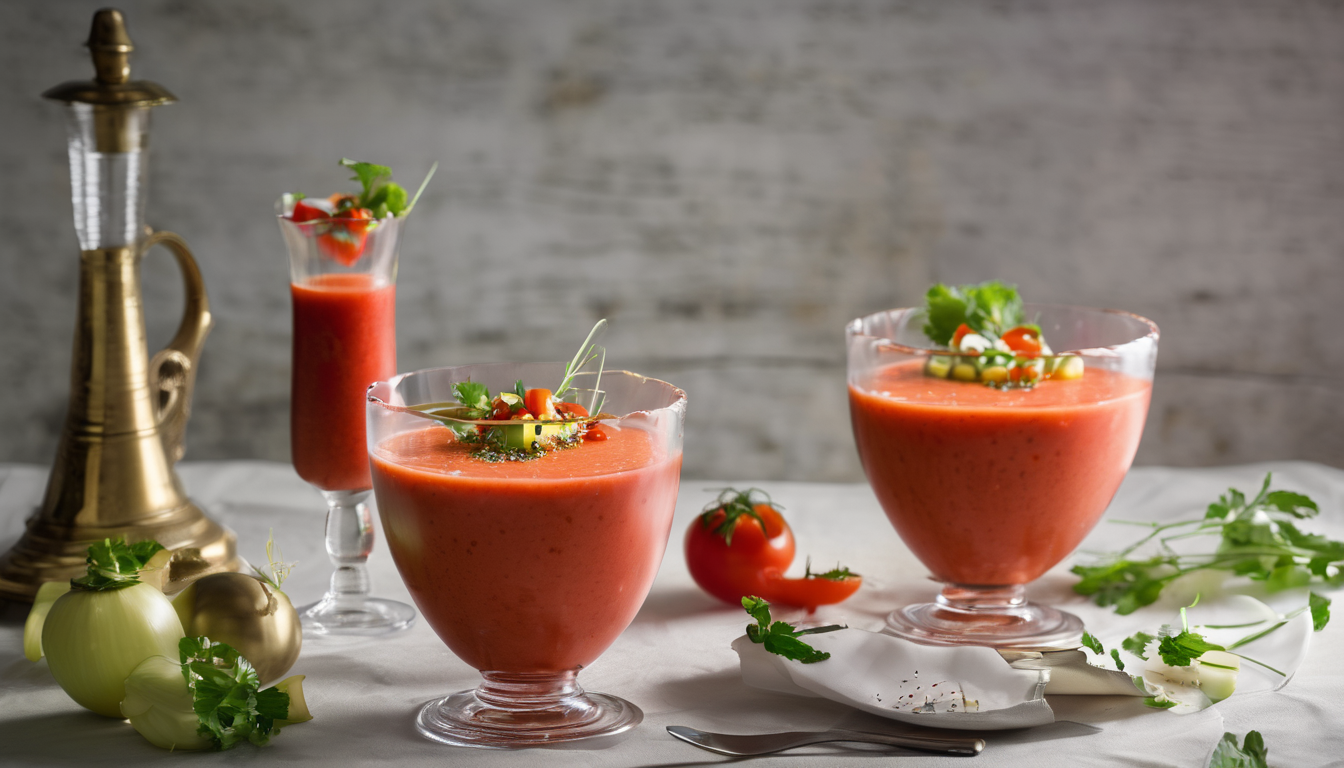
Ingredients and preparation
Chilled gazpacho is a refreshing Spanish soup made from raw vegetables, perfect for hot summer days. To prepare an authentic and flavorful gazpacho, start with the freshest ingredients available. Below is a list of ingredients followed by step-by-step preparation instructions.
Ingredients:
- 6 ripe tomatoes, cored and chopped
- 1 cucumber, peeled and chopped
- 1 red bell pepper, seeded and chopped
- 1 green bell pepper, seeded and chopped
- 1 small red onion, peeled and chopped
- 2 cloves garlic, minced
- 3 tablespoons extra virgin olive oil
- 2 tablespoons red wine vinegar
- 1 teaspoon salt (or to taste)
- 1/2 teaspoon freshly ground black pepper
- 2 cups tomato juice or cold water (adjust for desired consistency)
- Optional: a few dashes of hot sauce or a pinch of cayenne pepper for heat
Preparation:
- Combine the tomatoes, cucumber, red and green bell peppers, onion, and garlic in a large mixing bowl.
- Transfer the mixture in batches to a blender or food processor. Blend until smooth or leave slightly chunky, depending on your texture preference.
- Return the blended mixture to the bowl. Stir in the olive oil, red wine vinegar, salt, pepper, and tomato juice or water. Mix well to combine.
- Taste and adjust seasoning as needed. Add hot sauce or cayenne pepper if a spicier flavor is desired.
- Cover and refrigerate for at least 2 hours, or until thoroughly chilled. This allows the flavors to meld and intensify.
- Before serving, stir the soup and check the consistency. Add more tomato juice or water if it has thickened too much during chilling.
For best results, use ripe, in-season tomatoes and high-quality olive oil. Chilling the soup thoroughly is essential to achieving the crisp, refreshing taste that defines a classic gazpacho.
Serving suggestions
Chilled gazpacho is best served in small bowls, cups, or even shot glasses for a stylish appetizer presentation. For a traditional touch, serve it in rustic earthenware bowls that help maintain its cool temperature. To elevate the visual appeal and add texture, garnish each serving with finely diced cucumber, bell pepper, and tomato. A drizzle of extra virgin olive oil and a sprinkle of flaky sea salt just before serving can enhance the flavor and presentation.
For a more substantial dish, pair gazpacho with crusty bread such as a rustic baguette or slices of grilled sourdough. A side of Spanish tapas—like marinated olives, manchego cheese, or jamón serrano—complements the soup beautifully and creates a complete Mediterranean experience.
Gazpacho also works well as a palate cleanser between courses or as a light starter for a summer meal. If you’re hosting a gathering, consider setting up a gazpacho bar with a variety of toppings such as chopped herbs (basil, parsley, or chives), croutons, diced avocado, or even a dollop of Greek yogurt for guests to customize their bowls.
For an elegant twist, serve gazpacho in chilled martini glasses with a skewer of grilled shrimp or a slice of prosciutto-wrapped melon on the rim. This not only adds protein but also creates a sophisticated presentation suitable for dinner parties or special occasions.
Always serve gazpacho well-chilled, ideally straight from the refrigerator. If preparing in advance, give it a good stir before serving to redistribute any settled ingredients and refresh the texture. Avoid adding ice cubes directly to the soup, as they can dilute the flavor—opt instead for chilling the serving bowls or glasses beforehand to maintain the ideal temperature.
Health benefits and variations
Gazpacho is not only a flavorful and refreshing dish but also a powerhouse of nutrition, making it an excellent choice for health-conscious eaters. Made primarily from raw vegetables, it is naturally low in calories and rich in essential vitamins and minerals. Tomatoes, the base of the soup, are high in lycopene—an antioxidant linked to reduced risk of heart disease and certain cancers. Cucumbers and bell peppers contribute hydration and fiber, while garlic and onions offer anti-inflammatory and immune-boosting properties.
Because gazpacho is served raw, none of the nutrients are lost through cooking, preserving the full spectrum of vitamins such as vitamin C, vitamin A, and potassium. The inclusion of extra virgin olive oil not only enhances flavor but also provides heart-healthy monounsaturated fats and helps the body absorb fat-soluble vitamins from the vegetables.
For those following specific dietary plans, gazpacho is naturally vegan and gluten-free, making it suitable for a wide range of dietary needs. To increase protein content, consider adding toppings like diced hard-boiled eggs, chickpeas, or a spoonful of Greek yogurt. For a keto-friendly version, reduce the amount of tomato juice and avoid starchy vegetables like carrots or sweet corn.
Gazpacho is also highly customizable, allowing for creative variations based on seasonal produce or personal taste. Try a green gazpacho by substituting tomatillos and green bell peppers for the red tomatoes and peppers, and adding fresh herbs like cilantro and mint. For a fruit-forward twist, blend in watermelon or strawberries for a sweet-savory balance that pairs beautifully with a touch of balsamic vinegar.
Another popular variation is white gazpacho, or “ajo blanco,” made with almonds, garlic, bread, olive oil, and grapes. This version offers a creamy texture and a delicate flavor profile, ideal for those looking for something different yet equally refreshing.
Whether enjoyed as a light lunch, a starter, or a healthy snack, gazpacho offers a delicious way to incorporate more vegetables into your diet while staying cool and nourished during the warmer months.