
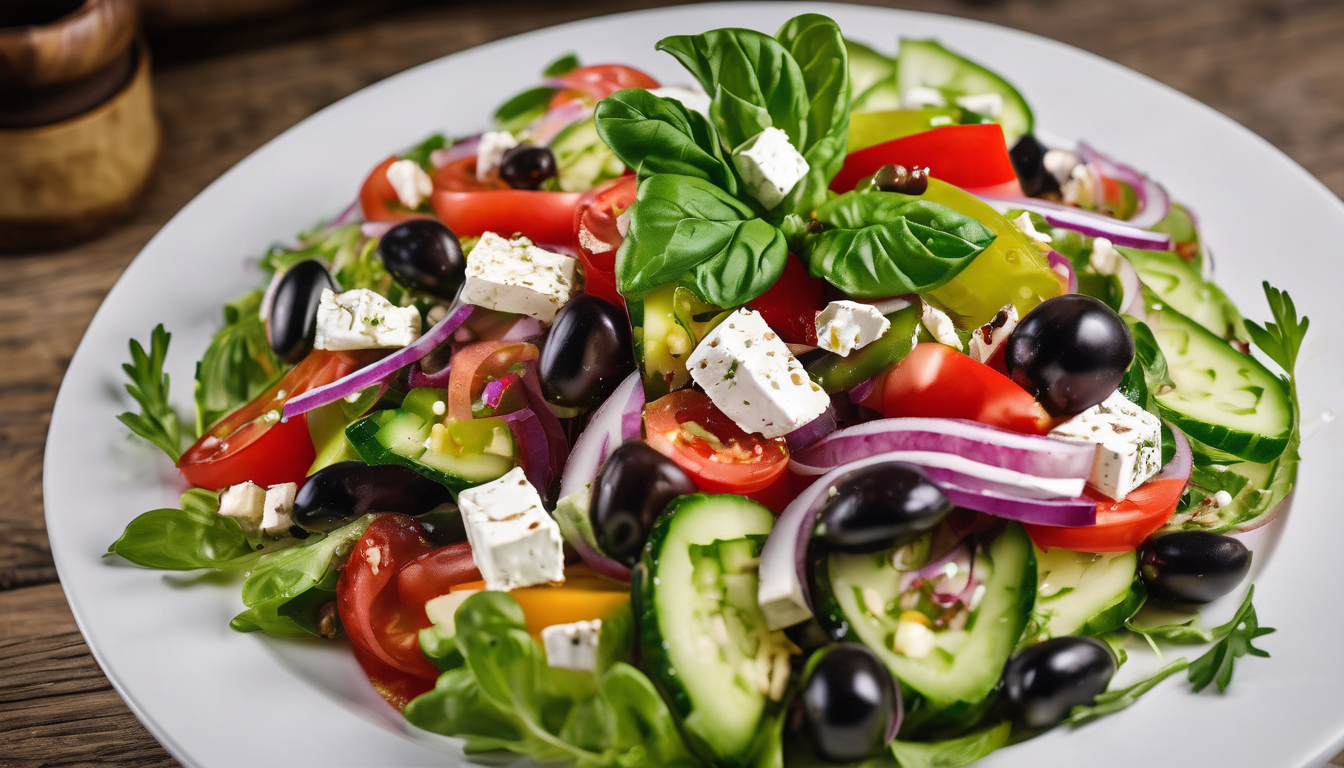
Ingredients and preparation
Greek salad, known in Greece as “Horiatiki,” is a refreshing and vibrant dish that highlights the simplicity and quality of Mediterranean ingredients. It requires no cooking, making it an ideal choice for a quick, healthy meal or side dish. The key to an authentic Greek salad lies in using fresh, ripe produce and high-quality olive oil.
Ingredients:
- 4 ripe tomatoes, cut into wedges
- 1 cucumber, peeled and sliced into half-moons
- 1 small red onion, thinly sliced
- 1 green bell pepper, sliced into rings
- 200g (7 oz) block of Greek feta cheese
- 100g (3.5 oz) Kalamata olives, whole or pitted
- 2–3 tablespoons extra virgin olive oil
- 1 tablespoon red wine vinegar (optional)
- 1 teaspoon dried oregano
- Salt, to taste
- Freshly ground black pepper, to taste
Preparation:
- Start by preparing the vegetables. Wash and cut the tomatoes into wedges. Peel the cucumber and slice it into thick half-moons. Thinly slice the red onion and cut the green bell pepper into rings.
- Place all the vegetables in a large salad bowl. Add the Kalamata olives on top.
- Cut the block of feta cheese into a thick slice or large cubes and place it over the salad. Traditionally, the feta is served as a single slab on top of the vegetables.
- Drizzle the extra virgin olive oil generously over the salad. If desired, add a splash of red wine vinegar for extra tanginess.
- Sprinkle the dried oregano over the feta and vegetables. Season with salt and freshly ground black pepper to taste. Be cautious with the salt, as feta and olives are naturally salty.
- Serve immediately, ideally with crusty bread to soak up the flavorful juices.
Cooking Tips:
- Use ripe, in-season tomatoes for the best flavor. Heirloom or vine-ripened varieties work particularly well.
- Authentic Greek salad does not include lettuce or other leafy greens.
- Choose a high-quality Greek feta made from sheep’s milk for a creamy texture and rich flavor.
- Let the salad sit for 10–15 minutes before serving to allow the flavors to meld together.
- For a more rustic presentation, serve the salad directly in the bowl used for mixing, allowing the juices to collect at the bottom.
Variations and regional differences
While the classic Horiatiki salad is widely recognized, regional variations across Greece reflect local tastes and available ingredients. In the Cyclades, for example, capers are often added for a briny, floral note that complements the olives and feta. On the island of Crete, dakos—a barley rusk—is sometimes placed at the bottom of the salad, absorbing the juices and adding a hearty texture.
In northern Greece, green chili peppers may be included to introduce a subtle heat, while in the Peloponnese, locals might add pickled vegetables or use a splash of local vinegar instead of lemon juice or red wine vinegar. Some regions also prefer to crumble the feta over the salad rather than serving it as a block, allowing it to mix more thoroughly with the other ingredients.
Outside of Greece, adaptations often include ingredients not traditionally found in Horiatiki. Lettuce, for instance, is a common addition in American-style Greek salads, along with ingredients like pepperoncini, radishes, or even grilled chicken. While these versions can be delicious, they differ significantly from the authentic Greek preparation.
Another notable variation is the use of different olives. While Kalamata olives are the standard, some regions use green olives or locally cured varieties, each imparting a unique flavor profile. Similarly, the type of olive oil used can vary, with some areas favoring robust, peppery oils and others preferring a milder, fruitier profile.
These regional and international variations showcase the versatility of Greek salad and its ability to adapt while still celebrating the core elements of Mediterranean cuisine: freshness, simplicity, and bold flavors.
Nutritional benefits and serving suggestions
Greek salad is not only a flavorful and refreshing dish but also a nutritional powerhouse that aligns with the principles of the Mediterranean diet. Packed with fresh vegetables, healthy fats, and minimal processing, it offers a range of health benefits that make it an excellent choice for both everyday meals and special occasions.
The base of the salad—tomatoes, cucumbers, bell peppers, and onions—provides a rich source of vitamins and antioxidants. Tomatoes are high in vitamin C and lycopene, a powerful antioxidant linked to heart health and reduced cancer risk. Cucumbers contribute hydration and fiber, while bell peppers and onions offer additional vitamin C, flavonoids, and anti-inflammatory compounds.
Feta cheese, traditionally made from sheep’s milk or a blend of sheep and goat’s milk, adds a creamy texture and a dose of calcium and protein. Though it is higher in sodium, when used in moderation, it contributes to the salad’s satiety and flavor without overwhelming the dish nutritionally. Choosing a high-quality feta ensures a richer nutrient profile and better taste.
Kalamata olives and extra virgin olive oil are key sources of heart-healthy monounsaturated fats. These fats help reduce bad cholesterol levels and support cardiovascular health. Olive oil also contains polyphenols, which have anti-inflammatory and antioxidant properties. When used as a dressing, it enhances the absorption of fat-soluble vitamins from the vegetables.
Greek salad is naturally low in carbohydrates and free from added sugars, making it suitable for low-carb and diabetic-friendly diets. It is also gluten-free and can be adapted for vegetarian diets. For those watching their sodium intake, rinsing the olives and using a smaller portion of feta can help reduce the overall salt content without compromising flavor.
Serving Suggestions:
- Serve Greek salad as a light lunch or dinner alongside grilled fish, chicken, or lamb for a balanced Mediterranean meal.
- Pair it with warm pita bread or crusty whole grain bread to soak up the flavorful juices and olive oil.
- Use it as a topping for grain bowls or as a filling for wraps and sandwiches to add freshness and crunch.
- For a more substantial meal, add a handful of cooked chickpeas or lentils for extra protein and fiber.
- Chill the salad for 30 minutes before serving on hot days to enhance its refreshing qualities.
Whether enjoyed as a side dish or a main course, Greek salad offers a delicious way to incorporate more vegetables and healthy fats into your diet while celebrating the vibrant flavors of the Mediterranean.