
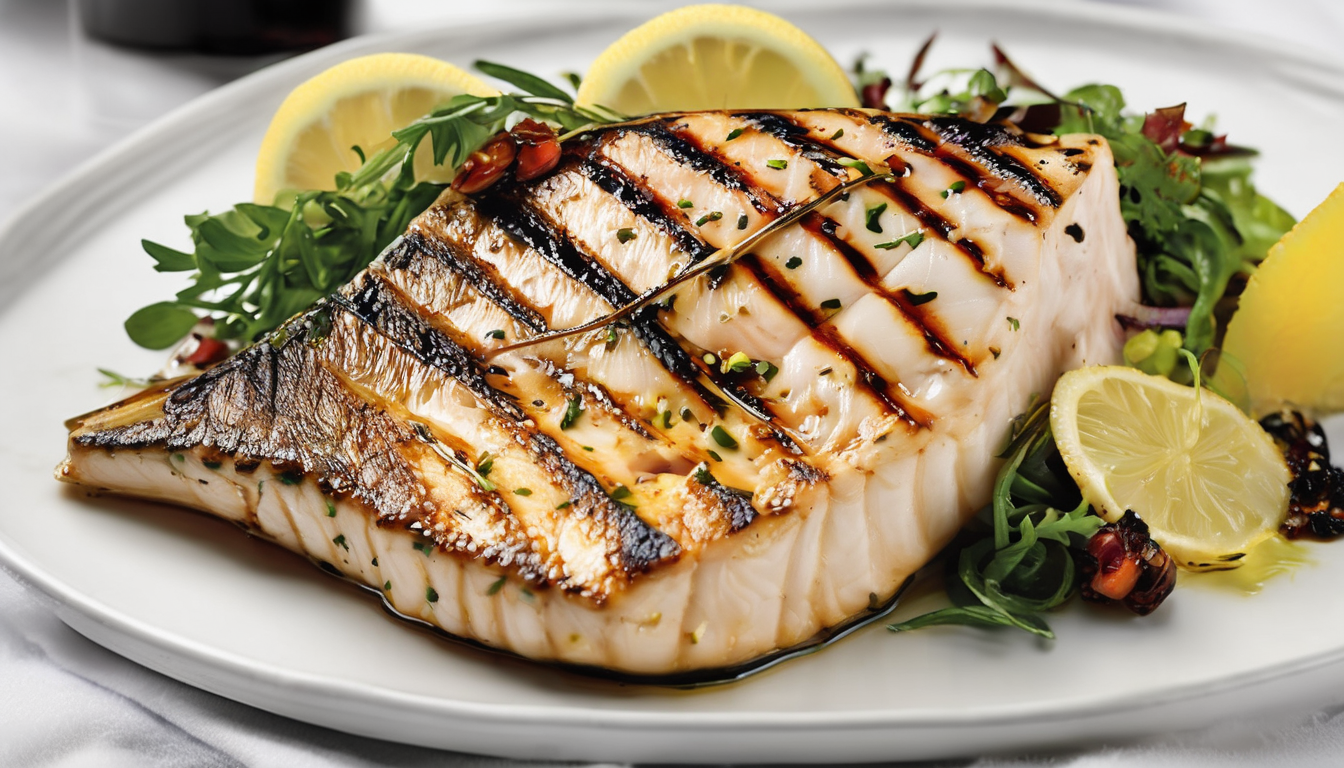
Choosing the right cut
When preparing grilled swordfish, selecting the right cut is essential to achieving a flavorful and juicy result. Swordfish is a firm, meaty fish that holds up well on the grill, but not all cuts are created equal. The ideal choice is a center-cut steak, which comes from the thickest part of the fish and offers a uniform thickness for even cooking. These steaks typically range from 1 to 1.5 inches thick, providing the perfect balance between a seared exterior and a moist, tender interior.
Look for swordfish steaks that are moist but not wet, with a fresh, ocean-like aroma. The flesh should be ivory to light pink in color, with a tight grain and no signs of browning or drying around the edges. Avoid steaks with a strong fishy smell or those that appear dull or discolored, as these are signs of age or poor handling.
Bone-in steaks can add flavor and help the fish retain moisture during grilling, but boneless cuts are easier to handle and serve. If you prefer boneless, ask your fishmonger to remove the central bone while keeping the steak intact. Always ensure the skin is removed before grilling, as it can become tough and rubbery over high heat.
For best results, purchase swordfish from a reputable fish market or seafood counter that practices sustainable sourcing. Freshness is key, so plan to cook the fish the same day you buy it or store it in the coldest part of your refrigerator for no more than 24 hours.
Marinades and seasoning tips
Marinating swordfish not only enhances its natural flavor but also helps keep the meat moist and tender during grilling. Because swordfish has a dense, steak-like texture, it can stand up to bold marinades without becoming overwhelmed. A good marinade should balance acidity, fat, and aromatics to complement the fish without overpowering it.
Here is a simple and flavorful marinade that works beautifully with swordfish:
- 1/4 cup olive oil
- 2 tablespoons fresh lemon juice
- 1 tablespoon red wine vinegar
- 2 cloves garlic, minced
- 1 teaspoon Dijon mustard
- 1 tablespoon chopped fresh oregano (or 1 teaspoon dried)
- 1/2 teaspoon crushed red pepper flakes (optional)
- Salt and freshly ground black pepper to taste
To prepare the marinade, whisk all ingredients together in a bowl until well combined. Place the swordfish steaks in a shallow dish or resealable plastic bag and pour the marinade over them, ensuring the fish is evenly coated. Marinate in the refrigerator for 30 minutes to 1 hour. Avoid marinating for longer than 2 hours, as the acid can begin to break down the fish’s texture, making it mushy.
For seasoning without a marinade, a simple rub of olive oil, sea salt, freshly ground black pepper, and a sprinkle of smoked paprika or lemon zest can be just as effective. This minimalist approach allows the natural flavor of the swordfish to shine, especially when paired with a flavorful sauce or salsa after grilling.
Always pat the fish dry with paper towels before placing it on the grill, even if it has been marinated. Excess moisture can cause flare-ups and prevent a good sear. Lightly brushing the fish with oil just before grilling also helps prevent sticking and promotes even browning.
Grilling techniques and serving suggestions
Grilling swordfish requires attention to timing and temperature to ensure a perfectly cooked steak with a crisp exterior and moist, flaky interior. Preheat your grill to medium-high heat, around 400–450°F. If using a charcoal grill, wait until the coals are covered with white ash and spread evenly. For gas grills, allow at least 10–15 minutes of preheating with the lid closed to reach the desired temperature.
Lightly oil the grill grates using a paper towel dipped in vegetable oil and held with tongs. This step helps prevent the fish from sticking and tearing during cooking. Place the swordfish steaks directly over the heat and grill for 4 to 5 minutes per side, depending on thickness. A 1-inch thick steak typically takes about 8 to 10 minutes total. Avoid moving the fish too early; let it develop a good sear before flipping.
To test for doneness, insert a fork or knife into the thickest part of the steak. The flesh should be opaque and just begin to flake, with a slight resistance in the center. Overcooking can dry out swordfish, so aim for an internal temperature of 130–135°F, allowing for carryover cooking after removing it from the grill.
Once off the grill, let the swordfish rest for 3 to 5 minutes before serving. This allows the juices to redistribute and ensures a moist bite. For added flavor, finish with a drizzle of extra virgin olive oil, a squeeze of fresh lemon juice, or a spoonful of herb salsa or compound butter.
Grilled swordfish pairs well with a variety of sides. Consider serving it with:
- Grilled vegetables such as zucchini, bell peppers, or asparagus
- Herbed couscous or a light quinoa salad
- Roasted potatoes with garlic and rosemary
- Fresh tomato and basil salad with a balsamic glaze
For a Mediterranean twist, top the swordfish with a tapenade of olives, capers, and sun-dried tomatoes. Alternatively, a mango salsa or chimichurri sauce can add a bright, zesty contrast to the rich, meaty fish. Whether served as a main course or sliced for fish tacos, grilled swordfish is a versatile and satisfying dish that shines with simple, thoughtful preparation.