
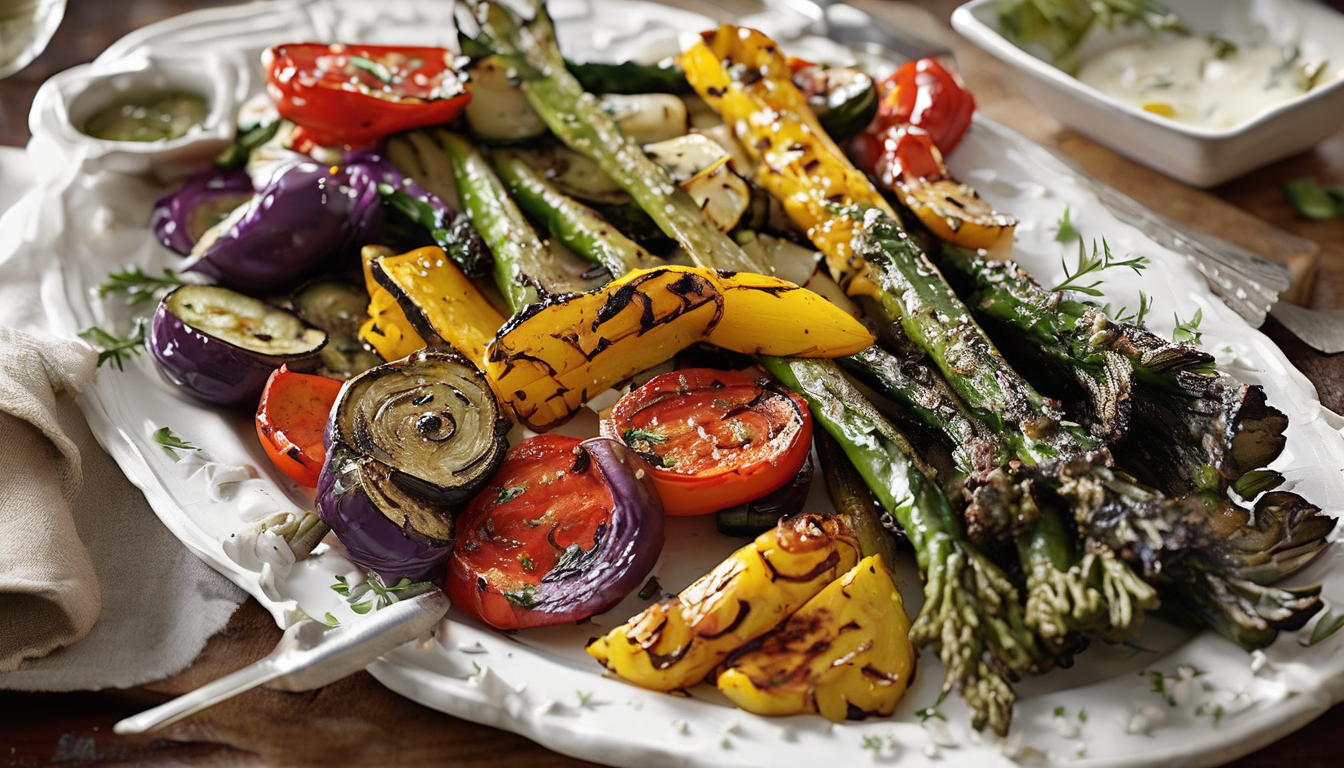
Choosing the right vegetables
When it comes to grilling vegetables, selecting the right produce is essential for achieving the best flavor, texture, and visual appeal. Not all vegetables respond equally well to the high, dry heat of the grill, so choosing varieties that can withstand direct heat without falling apart or drying out is key.
Best vegetables for grilling:
- Bell Peppers: Their thick walls and natural sweetness make them ideal for grilling. They char beautifully and develop a smoky flavor.
- Zucchini and Yellow Squash: These summer squashes grill quickly and maintain a tender texture with a slight bite.
- Eggplant: With its meaty texture, eggplant becomes creamy and rich when grilled. Choose firm, glossy specimens for best results.
- Asparagus: Thin spears cook quickly and develop a delicious char. Thicker spears can be used for a heartier bite.
- Red Onions: When sliced into thick rounds or wedges, red onions caramelize and sweeten on the grill.
- Mushrooms: Portobello, cremini, and button mushrooms hold up well to grilling and absorb marinades beautifully.
- Corn on the Cob: Grilling enhances the natural sweetness of corn and adds a smoky depth. It can be grilled in or out of the husk.
- Cherry Tomatoes: Skewered or placed in a grill basket, they blister and burst with flavor when grilled.
Tips for selecting vegetables:
- Choose vegetables that are firm and free of blemishes or soft spots.
- Opt for uniform sizes to ensure even cooking on the grill.
- Seasonal and locally grown vegetables often offer the best flavor and texture.
- Consider color variety for a visually appealing grilled vegetable platter.
By starting with the right vegetables, you set the foundation for a delicious and satisfying grilled dish that highlights the natural flavors of each ingredient.
Preparation and seasoning tips
Proper preparation and seasoning are crucial steps that elevate grilled vegetables from simple sides to standout dishes. Begin by washing and thoroughly drying all vegetables to ensure they sear rather than steam on the grill. Cut vegetables into uniform sizes to promote even cooking—thicker slices for softer vegetables like zucchini and eggplant, and thinner cuts for denser ones like carrots or sweet potatoes.
Basic preparation steps:
- Trim and slice: Remove stems, seeds, and any tough ends. Slice vegetables into manageable pieces that won’t fall through the grill grates.
- Marinate or oil: Lightly coat vegetables with olive oil to prevent sticking and enhance browning. For added flavor, marinate for 15–30 minutes in a mixture of oil, vinegar or citrus juice, garlic, and herbs.
- Skewering: For smaller items like cherry tomatoes or mushrooms, use skewers or a grill basket to keep them from slipping through the grates.
Suggested seasoning blends:
- Classic Mediterranean: Olive oil, minced garlic, lemon juice, oregano, and sea salt.
- Smoky BBQ: Olive oil, smoked paprika, cumin, brown sugar, and black pepper.
- Asian-inspired: Sesame oil, soy sauce, grated ginger, and a touch of honey or rice vinegar.
- Herbaceous mix: Olive oil, chopped fresh rosemary, thyme, and a pinch of red pepper flakes.
Tips for optimal flavor:
- Let vegetables sit at room temperature for 15–20 minutes after seasoning to absorb flavors more effectively.
- Don’t over-marinate—especially with acidic ingredients—as this can break down the vegetables and make them mushy.
- Use coarse salt and freshly ground pepper just before grilling to enhance texture and taste.
- For a finishing touch, drizzle grilled vegetables with a balsamic reduction or sprinkle with crumbled feta or fresh herbs.
With thoughtful preparation and the right seasoning, grilled vegetables can be transformed into vibrant, flavorful dishes that complement any meal or stand proudly on their own.
Grilling techniques and timing
Grilling vegetables requires attention to heat levels, timing, and technique to bring out their natural sweetness and achieve the perfect char without overcooking. Begin by preheating your grill to medium-high heat—around 400–450°F (200–230°C). A properly heated grill ensures that vegetables sear quickly, locking in moisture and flavor.
Grilling techniques:
- Direct grilling: Place vegetables directly over the heat source for a quick sear and char. This method works well for bell peppers, zucchini, eggplant, and asparagus.
- Indirect grilling: For denser vegetables like carrots or potatoes, use indirect heat by placing them away from the flame or coals. This allows them to cook through without burning on the outside.
- Use of grill baskets or skewers: Smaller or delicate vegetables such as cherry tomatoes or mushrooms benefit from being placed in a grill basket or threaded onto skewers to prevent them from falling through the grates.
- Crosshatch marks: To achieve attractive grill marks, place vegetables at a 45-degree angle to the grates, then rotate them halfway through cooking on each side.
Estimated grilling times:
- Bell Peppers: 6–8 minutes, turning occasionally until skin is blistered and flesh is tender.
- Zucchini and Yellow Squash: 3–5 minutes per side, until grill marks appear and texture is tender-crisp.
- Eggplant: 4–6 minutes per side, depending on thickness. Look for a soft, creamy interior.
- Asparagus: 2–4 minutes, rolling occasionally for even charring.
- Red Onions: 4–5 minutes per side, until caramelized and softened.
- Mushrooms: 5–7 minutes, turning once. Portobellos may take slightly longer.
- Corn on the Cob: 10–15 minutes, turning every few minutes. Husk-on corn will take longer and steam in its own moisture.
- Cherry Tomatoes: 3–4 minutes in a grill basket or on skewers, until skins blister and begin to burst.
Tips for success:
- Brush the grill grates with oil or use a grill-safe nonstick spray to prevent sticking.
- Do not overcrowd the grill—leave space between vegetables to allow for even heat circulation.
- Use tongs or a spatula to turn vegetables gently, avoiding piercing them and losing juices.
- Keep a spray bottle of water nearby to manage flare-ups from dripping oil or marinades.
- Test doneness by piercing with a fork—vegetables should be tender but not mushy.
Mastering the timing and technique of grilling ensures that each vegetable reaches its full flavor potential, with a balance of smoky char and tender texture that elevates any dish.