
History and evolution
Ice cream sandwiches have a rich and varied history that reflects both culinary innovation and cultural trends. The earliest known version of the ice cream sandwich dates back to the late 19th century in the United States. Street vendors in New York City were known to sell slabs of vanilla ice cream pressed between thin graham wafers or sponge cake for just a penny. These early treats were simple, handheld, and wildly popular among working-class families and children looking for a cool indulgence during hot summers.
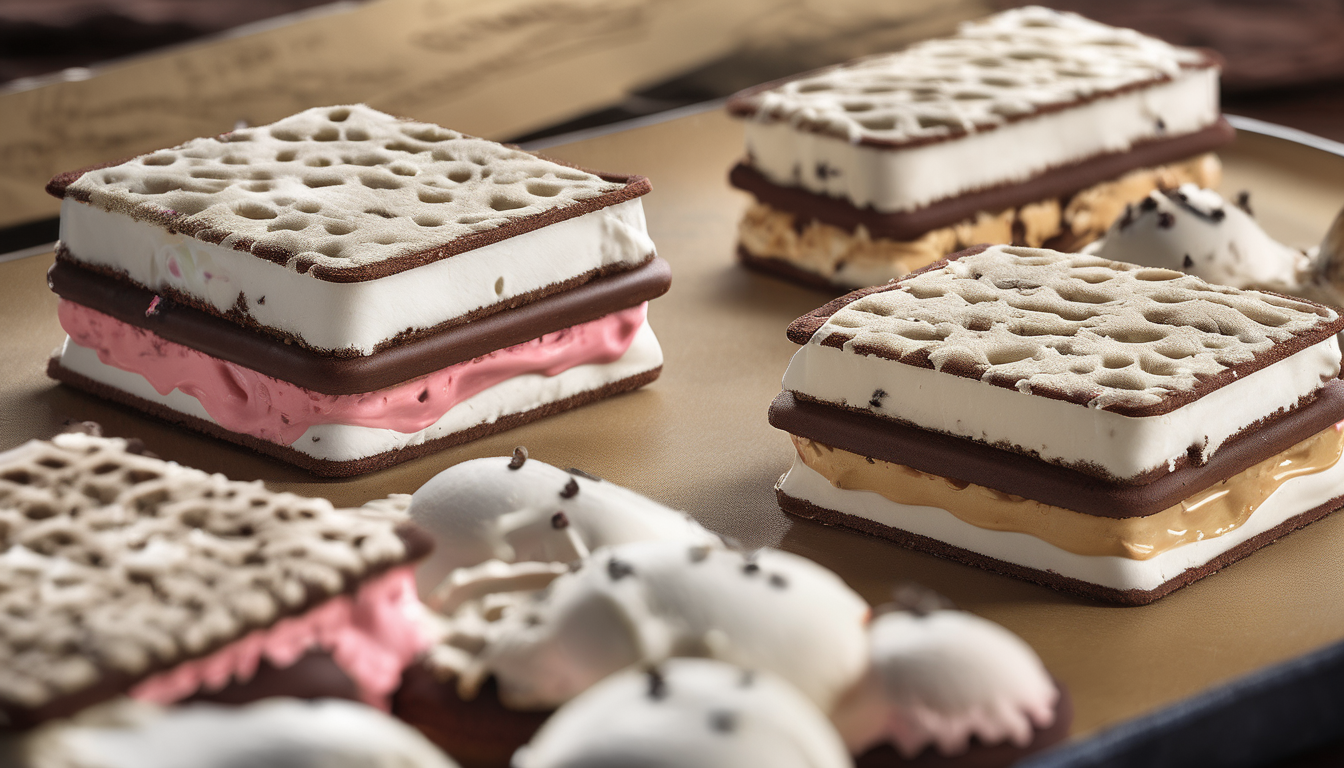
By the 1920s and 1930s, the ice cream sandwich began to evolve with the introduction of mass production techniques. Commercial bakeries and ice cream manufacturers started producing standardized versions, often using rectangular chocolate cookies and vanilla ice cream. This classic combination became the blueprint for the modern American ice cream sandwich, which remains a nostalgic favorite to this day.
In the decades that followed, regional and international variations began to emerge. In Australia, the “Giant Sandwich” became a staple, while in Iran, traditional saffron and rosewater ice cream was paired with thin wafers. In Southeast Asia, ice cream sandwiches took on a unique twist with scoops of ice cream served between slices of sweet bread, often dyed in vibrant colors and sprinkled with chocolate or nuts.
By the late 20th century, artisanal and gourmet versions of the ice cream sandwich began to gain popularity. Chefs and home bakers experimented with different cookie bases—such as brownies, macarons, and even doughnuts—and a wide array of ice cream flavors, from salted caramel to matcha green tea. These innovations transformed the humble ice cream sandwich into a versatile dessert that could be customized for any palate or occasion.
Today, the ice cream sandwich continues to evolve, with plant-based and dairy-free options becoming more prevalent to meet dietary preferences. Whether enjoyed as a nostalgic treat or a sophisticated dessert, the ice cream sandwich remains a beloved part of culinary history, celebrated for its simplicity, portability, and endless potential for creativity.
Popular flavors and variations
Ice cream sandwiches have become a canvas for creativity, with countless flavor combinations and textures that cater to every taste. While the classic pairing of vanilla ice cream and chocolate cookies remains a timeless favorite, modern variations have expanded the possibilities far beyond the traditional.
Popular Ice Cream Flavors:
- Vanilla Bean: A rich, creamy base with flecks of real vanilla bean, perfect for pairing with almost any cookie.
- Chocolate Fudge: Deep and decadent, this flavor complements peanut butter or oatmeal cookies beautifully.
- Strawberry: Made with fresh berries or puree, this fruity option pairs well with shortbread or lemon cookies.
- Mint Chocolate Chip: Refreshing and cool, ideal with dark chocolate or brownie-style cookies.
- Salted Caramel: A sweet and savory twist that works wonderfully with snickerdoodle or graham cracker cookies.
- Cookies and Cream: A nostalgic favorite that doubles down on cookie flavor when paired with chocolate chip cookies.
- Matcha Green Tea: Earthy and slightly bitter, this flavor is often paired with almond or coconut cookies for a sophisticated twist.
Popular Cookie Bases:
- Chocolate Chip Cookies: Soft and chewy, these are a go-to for a classic sandwich.
- Brownies: Dense and fudgy, brownies add a rich texture and flavor contrast to lighter ice creams.
- Macarons: Light and airy with a crisp shell, macarons offer a delicate and colorful alternative.
- Oatmeal Cookies: Hearty and slightly spiced, these pair well with fruit-based or caramel ice creams.
- Gingerbread Cookies: Spicy and aromatic, ideal for holiday-themed sandwiches with eggnog or cinnamon ice cream.
- Waffles: Soft and slightly sweet, waffles make for a breakfast-inspired twist on the traditional sandwich.
Creative Variations:
- Vegan Ice Cream Sandwiches: Made with dairy-free ice cream (such as coconut or almond milk-based) and plant-based cookies.
- Gluten-Free Options: Using almond flour or oat-based cookies to accommodate dietary restrictions without sacrificing flavor.
- Mini Sandwiches: Bite-sized versions perfect for parties or portion control, often made with smaller cookies or cut-outs.
- Dipped Sandwiches: Half-dipped in chocolate and sprinkled with nuts, crushed candy, or sprinkles for added texture and flair.
- Savory-Sweet Combos: Incorporating elements like bacon bits in cookies or using salted pretzel cookies for a unique flavor profile.
With so many combinations to explore, ice cream sandwiches offer endless opportunities for personalization. Whether you prefer bold and adventurous flavors or stick to the classics, there’s a perfect pairing waiting to be discovered.
How to make your own
Making your own ice cream sandwiches at home is a rewarding and delicious project that allows for endless customization. Whether you’re crafting a classic vanilla-chocolate combo or experimenting with bold flavors, the process is simple and fun. Below is a basic recipe to get you started, along with tips to ensure your sandwiches turn out perfectly every time.
Ingredients:
- For the cookies:
- 1 cup (2 sticks) unsalted butter, softened
- 1 cup brown sugar, packed
- 1/2 cup granulated sugar
- 2 large eggs
- 2 teaspoons vanilla extract
- 2 1/2 cups all-purpose flour
- 1 teaspoon baking soda
- 1/2 teaspoon salt
- 1 1/2 cups semi-sweet chocolate chips (optional)
- For the filling:
- 1 to 1 1/2 quarts of your favorite ice cream (vanilla, chocolate, strawberry, etc.), slightly softened
Instructions:
- Step 1: Prepare the cookies
- Preheat your oven to 350°F (175°C). Line two baking sheets with parchment paper.
- In a large bowl, cream together the butter, brown sugar, and granulated sugar until light and fluffy.
- Add the eggs one at a time, beating well after each addition. Stir in the vanilla extract.
- In a separate bowl, whisk together the flour, baking soda, and salt. Gradually add the dry ingredients to the wet mixture, mixing until just combined.
- Fold in the chocolate chips if using.
- Drop rounded tablespoons of dough onto the prepared baking sheets, spacing them about 2 inches apart. Flatten slightly with the back of a spoon for even thickness.
- Bake for 10–12 minutes, or until the edges are golden brown. Let cool completely on a wire rack.
- Step 2: Assemble the sandwiches
- Once the cookies are completely cool, pair them by size.
- Scoop about 1/4 to 1/3 cup of softened ice cream onto the flat side of one cookie. Top with the matching cookie and gently press to spread the ice cream evenly to the edges.
- Wrap each sandwich in plastic wrap or parchment paper and place in the freezer for at least 2 hours to firm up.
Tips for Success:
- Use slightly underbaked cookies: Softer cookies are easier to bite into when frozen and create a better texture contrast with the ice cream.
- Soften the ice cream just enough: Let it sit at room temperature for 5–10 minutes before scooping. It should be pliable but not melted.
- Work quickly: Assemble the sandwiches in batches and return them to the freezer immediately to prevent melting.
- Customize your mix-ins: Add chopped nuts, dried fruit, or flavored extracts to the cookie dough for a unique twist.
- Roll the edges: After assembling, roll the sides of the sandwich in mini chocolate chips, sprinkles, or crushed cookies for extra flair.
With just a few ingredients and a bit of creativity, you can craft ice cream sandwiches that rival any store-bought version. The best part? You control the flavors, textures, and size, making them perfect for any occasion or craving.