
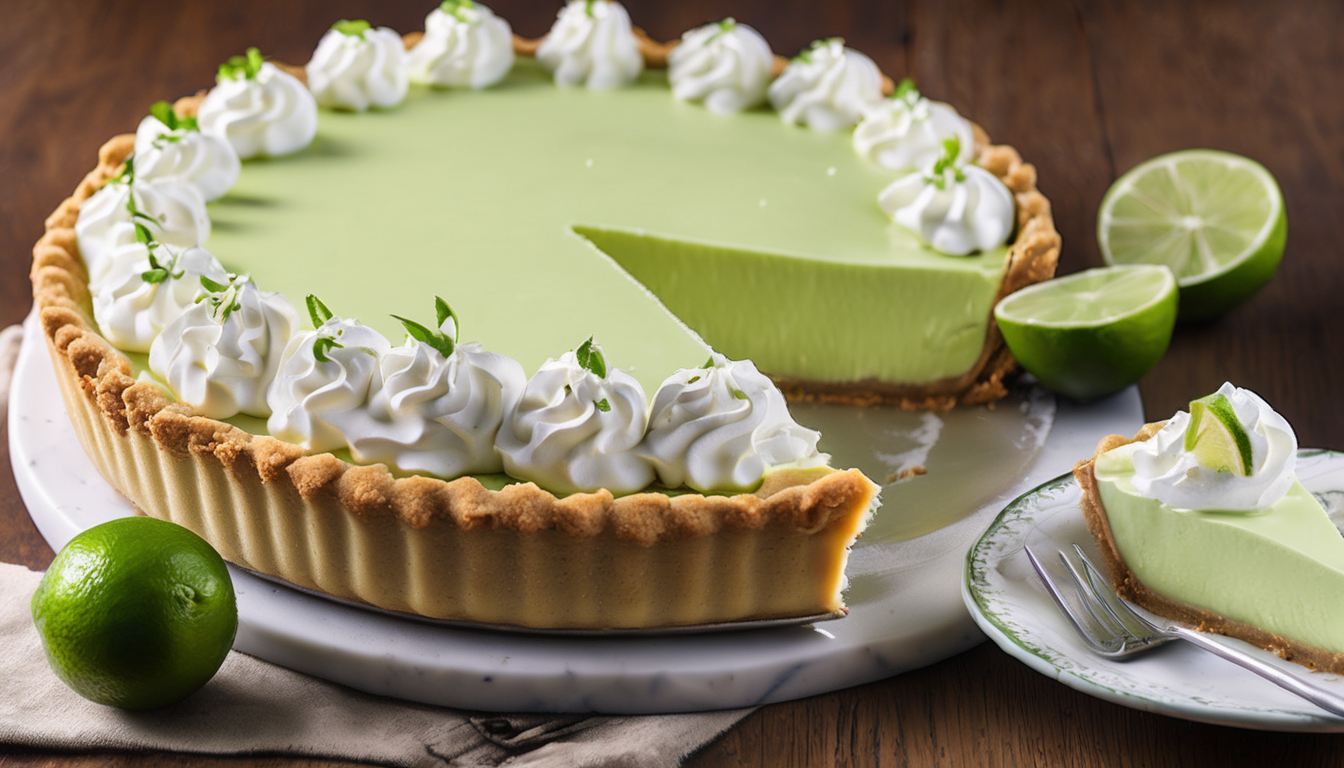
History and origin
Lime pie, most famously known in its Key lime variation, has its roots deeply embedded in the culinary traditions of the Florida Keys. The dessert is believed to have originated in the late 19th or early 20th century, when local cooks began using the small, tart Key limes native to the region. These limes were prized for their intense flavor and aromatic juice, which became the centerpiece of what would become an iconic American dessert.
Before the widespread availability of refrigeration, fresh milk was not commonly used in the Florida Keys. Instead, cooks relied on canned sweetened condensed milk, which became a defining ingredient in lime pie. The original recipes were simple and practical, often requiring no baking. The acidity of the lime juice would react with the condensed milk and egg yolks to thicken the filling naturally, a technique that was both efficient and effective in the tropical climate.
Over time, lime pie gained popularity beyond the Keys, especially as tourism to the region increased. By the mid-20th century, it had become a staple in American diners and home kitchens alike. The pie was officially recognized as the state pie of Florida in 2006, cementing its status as a cultural and culinary symbol of the region.
Though the classic version uses Key limes, which are smaller and more aromatic than the more common Persian limes, many modern recipes substitute with the latter due to availability. Despite this, purists argue that the unique flavor of Key limes is essential to achieving the authentic taste of the original pie.
Ingredients and preparation
To create a traditional lime pie, you’ll need a few key ingredients that balance tartness and sweetness, all layered into a buttery crust. Below is a classic recipe that highlights the simplicity and flavor of this beloved dessert.
Ingredients:
- For the crust:
- 1 1/2 cups graham cracker crumbs
- 1/4 cup granulated sugar
- 6 tablespoons unsalted butter, melted
- For the filling:
- 4 large egg yolks
- 1 can (14 ounces) sweetened condensed milk
- 1/2 cup freshly squeezed Key lime juice (or Persian lime juice if unavailable)
- 1 tablespoon finely grated lime zest
- For the topping (optional):
- 1 cup heavy whipping cream
- 2 tablespoons powdered sugar
- 1/2 teaspoon vanilla extract
Preparation:
- Step 1: Prepare the crust. Preheat your oven to 350°F (175°C). In a mixing bowl, combine the graham cracker crumbs, sugar, and melted butter. Stir until the mixture resembles wet sand. Press the mixture firmly into the bottom and up the sides of a 9-inch pie dish. Bake for 8–10 minutes, or until lightly golden. Let it cool slightly while you prepare the filling.
- Step 2: Make the filling. In a medium bowl, whisk the egg yolks until slightly thickened. Add the sweetened condensed milk and whisk until smooth. Stir in the lime juice and zest, mixing until fully incorporated. The mixture will begin to thicken slightly due to the acidity of the lime juice.
- Step 3: Bake the pie. Pour the filling into the cooled crust and smooth the top with a spatula. Bake for 15 minutes, or until the center is just set but still slightly jiggly. Remove from the oven and let cool to room temperature, then refrigerate for at least 3 hours or until fully chilled and firm.
- Step 4: Prepare the topping (optional). In a chilled mixing bowl, whip the heavy cream with powdered sugar and vanilla extract until soft peaks form. Spread or pipe the whipped cream over the chilled pie just before serving.
Cooking Tips:
- For the best flavor, use freshly squeezed lime juice rather than bottled. If using Key limes, you’ll need about 20–25 limes to yield 1/2 cup of juice.
- To make zesting easier, zest the limes before juicing them.
- Allow the pie to chill thoroughly before slicing to ensure clean, neat slices.
- If you prefer a no-bake version, you can skip baking the filling and let the pie set in the refrigerator for at least 6 hours, though the texture will be softer.
Variations and serving suggestions
There are numerous ways to adapt lime pie to suit different tastes, dietary needs, or presentation styles. One of the most popular variations is the frozen lime pie, where the filling is poured into the crust and then frozen instead of baked. This version offers a refreshing, ice-cream-like texture and is especially popular during warmer months. To make it, simply prepare the filling as usual, pour it into the pre-baked crust, and freeze for at least 4 hours. Serve it straight from the freezer with a dollop of whipped cream or a drizzle of raspberry coulis for a vibrant contrast.
For those seeking a dairy-free or vegan alternative, the filling can be made using coconut milk or a plant-based condensed milk substitute. Silken tofu blended with lime juice and sweetener also creates a creamy, tangy filling that sets well when chilled. Use a vegan graham cracker crust or a nut-based crust made from blended almonds and dates for a wholesome base.
Mini lime pies are another delightful twist, perfect for parties or individual servings. Use a muffin tin lined with cupcake wrappers or mini tart pans to create single-serve portions. These bake and chill faster and make for an elegant presentation when topped with a swirl of whipped cream and a thin slice of lime.
For a more indulgent take, consider adding a layer of white chocolate ganache between the crust and the lime filling. The sweetness of the chocolate balances the tartness of the lime and adds a luxurious texture. Alternatively, a meringue topping can be used instead of whipped cream. Spread or pipe the meringue over the chilled pie and lightly torch it for a golden finish, adding both visual appeal and a toasted flavor.
When it comes to serving, lime pie pairs beautifully with fresh berries, especially raspberries or blueberries, which complement the citrus notes. A light dusting of lime zest or a few mint leaves can enhance the presentation. For a tropical flair, serve with a side of mango or pineapple compote.
Whether served in its classic form or with a creative twist, lime pie remains a versatile dessert that can be tailored to suit any occasion or palate.