
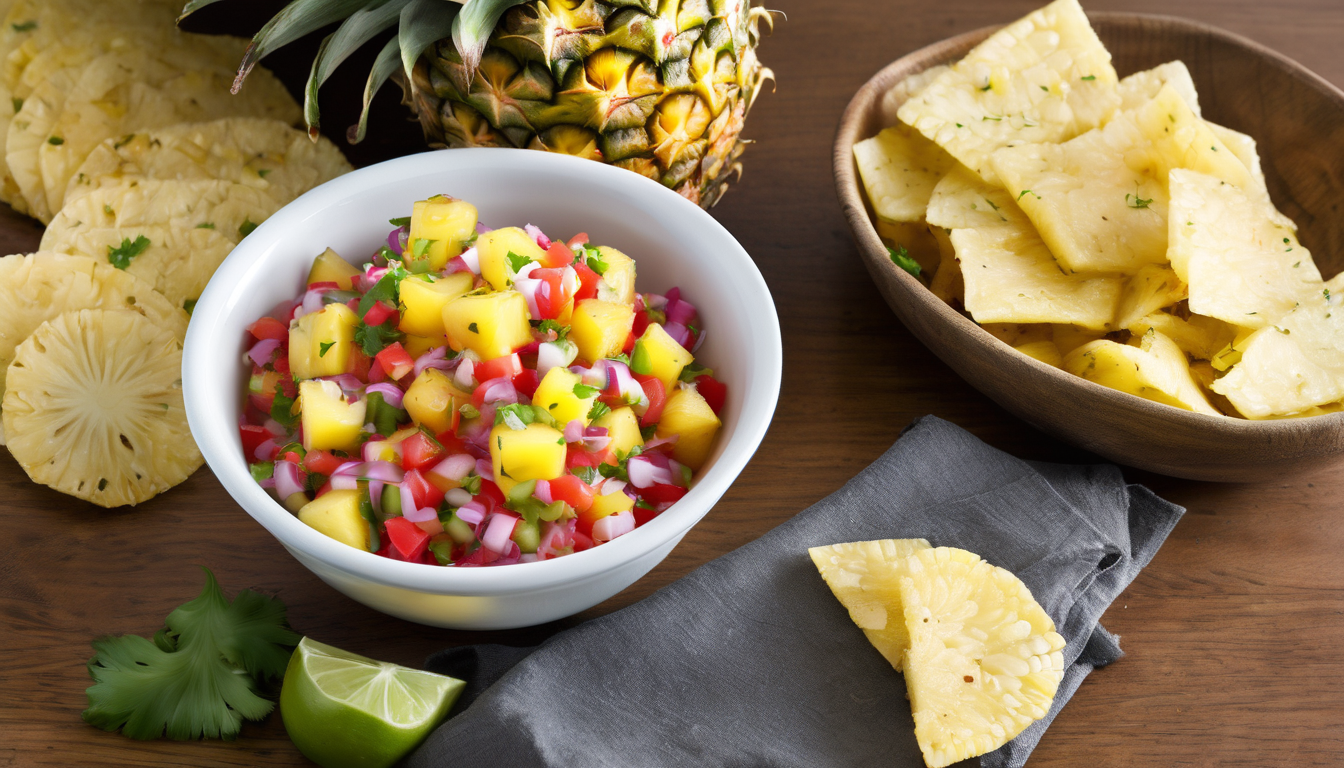
Ingredients and preparation
Pineapple salsa is a vibrant and refreshing condiment that combines the sweetness of ripe pineapple with the heat of chili peppers and the brightness of fresh herbs. It’s a versatile addition to many dishes and can be prepared in just a few simple steps.
Ingredients:
- 2 cups fresh pineapple, finely diced
- 1/2 red bell pepper, finely chopped
- 1/4 red onion, finely chopped
- 1 small jalapeño pepper, seeded and minced (adjust to taste)
- 1/4 cup fresh cilantro, chopped
- Juice of 1 lime
- Salt to taste
Preparation:
- Begin by preparing all the ingredients. Use a sharp knife to finely dice the pineapple, red bell pepper, and red onion. The smaller the pieces, the better the texture and flavor distribution in the salsa.
- Carefully remove the seeds and membranes from the jalapeño if you prefer a milder salsa. Mince it finely to ensure even heat throughout the mixture.
- In a medium mixing bowl, combine the diced pineapple, red bell pepper, red onion, and jalapeño.
- Add the chopped cilantro and squeeze in the fresh lime juice. Stir everything together gently to combine.
- Season with salt to taste. Start with a small pinch and adjust as needed after tasting.
- For best results, let the salsa sit for at least 15–20 minutes before serving. This allows the flavors to meld and intensify.
Use only fresh, ripe pineapple for the best flavor. If fresh pineapple is unavailable, canned pineapple can be used in a pinch, but be sure to drain it well and choose pineapple packed in juice rather than syrup. Always taste and adjust the seasoning before serving, as the sweetness and acidity of the pineapple can vary.
Serving suggestions
Pineapple salsa is incredibly versatile and can elevate a wide range of dishes with its sweet, tangy, and spicy profile. One of the most popular ways to serve it is as a topping for grilled meats. Spoon it generously over grilled chicken, pork chops, or fish such as mahi-mahi or salmon to add a burst of tropical flavor and a refreshing contrast to the savory protein.
It also pairs beautifully with tacos. Try it on fish tacos, shrimp tacos, or even pulled pork tacos to add brightness and texture. The juicy pineapple and crisp vegetables provide a delightful crunch that complements the soft tortillas and tender fillings.
For a vegetarian option, serve pineapple salsa over grilled vegetables or as a topping for black bean and quinoa bowls. It adds a lively dimension to plant-based meals and works well with ingredients like avocado, roasted sweet potatoes, and corn.
As an appetizer, pineapple salsa shines when served with tortilla chips. Offer it as a colorful and flavorful alternative to traditional tomato salsa at parties or gatherings. For a more elegant presentation, spoon it onto crostini with a smear of goat cheese or ricotta for a sweet-savory bite.
It can also be used as a condiment for burgers and sandwiches. Add a spoonful to a grilled chicken sandwich or a turkey burger to introduce a tropical twist. The acidity from the lime juice and the sweetness of the pineapple help cut through rich or fatty components, balancing the overall flavor.
For a creative brunch idea, try serving pineapple salsa alongside eggs—especially in breakfast burritos or atop a poached egg and avocado toast. Its vibrant flavor profile adds a refreshing contrast to creamy and savory breakfast staples.
Storage and shelf life
To maintain the freshness and vibrant flavor of pineapple salsa, proper storage is essential. Once prepared, transfer the salsa to an airtight container. Glass containers are ideal, as they do not absorb odors and help preserve the salsa’s bright taste. Store the container in the refrigerator immediately after preparation.
When stored correctly, pineapple salsa will stay fresh for up to 3 to 4 days in the refrigerator. Over time, the ingredients will continue to marinate, which can enhance the flavor, but the texture may begin to soften. For the best quality, consume the salsa within the first two days.
Before serving leftovers, give the salsa a gentle stir to redistribute the juices and flavors. If any excess liquid has accumulated at the bottom of the container, you can drain a small amount to maintain the desired consistency.
Freezing pineapple salsa is not recommended, as the texture of the fresh ingredients—especially the pineapple and bell pepper—can become mushy upon thawing. The salsa is best enjoyed fresh or within a few days of preparation.
Always use clean utensils when scooping out portions to avoid introducing bacteria, which can shorten the shelf life. If the salsa develops an off smell, discoloration, or slimy texture, it should be discarded immediately.