
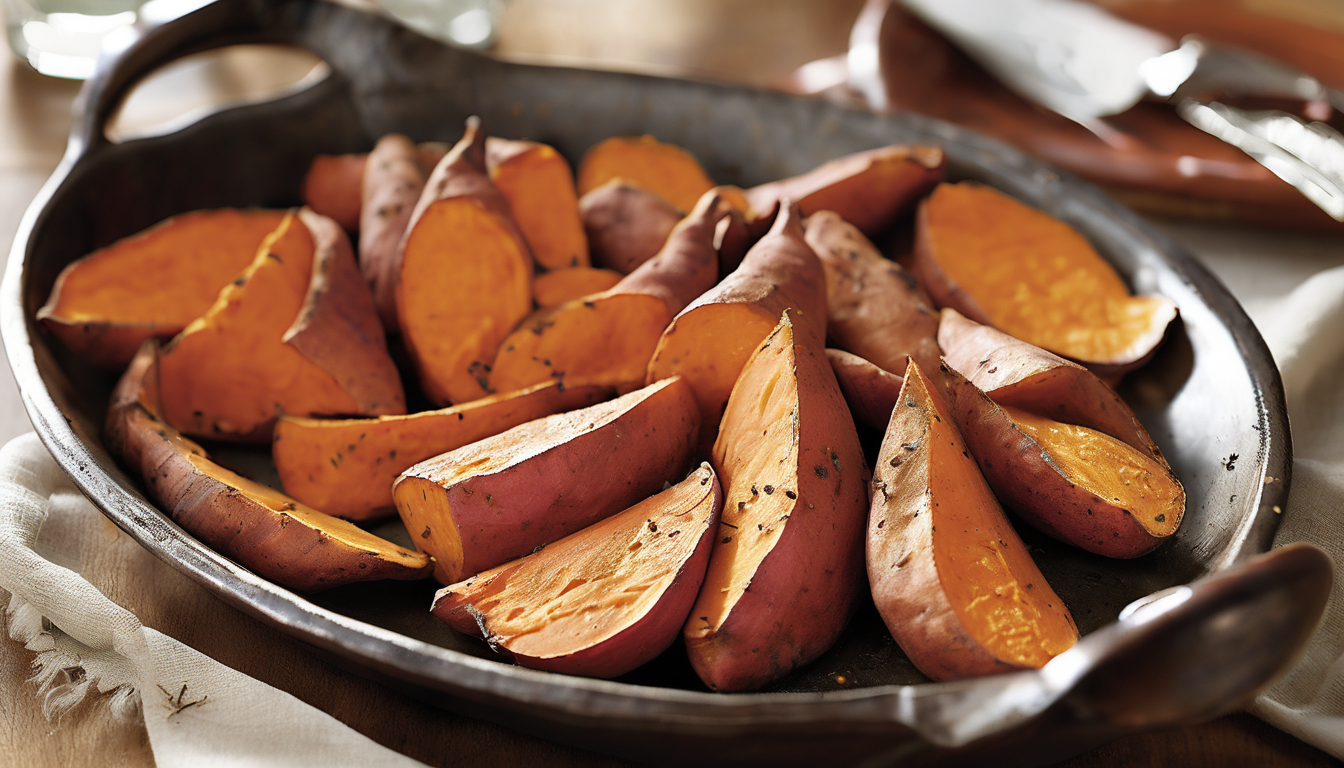
Selecting the right sweet potatoes
Choosing the right sweet potatoes is essential for achieving perfectly roasted results. The variety, size, and freshness of the sweet potatoes all play a role in the final texture and flavor of the dish.
Variety: For roasting, opt for orange-fleshed sweet potatoes, often labeled as “garnet” or “jewel” yams in grocery stores. These varieties are naturally sweeter and have a moist, creamy texture when roasted. White or purple-fleshed sweet potatoes can also be used, but they tend to be drier and less sweet, which may affect the overall flavor profile.
Size and Shape: Select medium-sized sweet potatoes that are uniform in size. This ensures even cooking and consistent texture. Avoid overly large sweet potatoes, as they may be fibrous in the center, and very small ones, which can dry out quickly in the oven.
Freshness: Look for sweet potatoes with smooth, unblemished skin and no signs of sprouting or wrinkling. Fresh sweet potatoes should feel firm and heavy for their size. Avoid any with soft spots, mold, or a sour smell, as these are signs of spoilage.
Storage Tip: Store sweet potatoes in a cool, dark, and well-ventilated place. Do not refrigerate them, as cold temperatures can alter their texture and flavor. Properly stored, they can last for several weeks, making them a convenient pantry staple for roasting.
Preparing and seasoning
Once you’ve selected the right sweet potatoes, proper preparation and seasoning are key to enhancing their natural sweetness and achieving a caramelized, flavorful finish. Begin by thoroughly washing the sweet potatoes under cold running water to remove any dirt. Use a vegetable brush if needed, especially if you plan to leave the skins on for added texture and nutrients.
Peeling is optional and depends on personal preference. The skin becomes crisp during roasting and adds a rustic touch, but if you prefer a smoother texture, peel the sweet potatoes using a vegetable peeler. Cut the sweet potatoes into uniform pieces—typically 1-inch cubes or wedges—to ensure even cooking. Avoid cutting them too small, as they may burn or dry out in the oven.
Ingredients:
- 2 pounds sweet potatoes, scrubbed and cut into 1-inch cubes
- 2 tablespoons olive oil
- 1 teaspoon kosher salt
- 1/2 teaspoon freshly ground black pepper
- 1/2 teaspoon smoked paprika (optional, for a smoky flavor)
- 1/2 teaspoon garlic powder or 2 cloves fresh garlic, minced
- 1 tablespoon chopped fresh rosemary or thyme (optional)
In a large mixing bowl, toss the sweet potato pieces with olive oil to coat them evenly. The oil not only helps with browning but also carries the seasoning and enhances flavor. Add salt, pepper, and any additional seasonings you prefer. Smoked paprika adds depth and a subtle heat, while garlic and fresh herbs like rosemary or thyme bring aromatic complexity. Mix well to ensure each piece is evenly seasoned.
For a touch of sweetness, consider adding a drizzle of maple syrup or a sprinkle of brown sugar before roasting. However, use sweeteners sparingly, as they can cause the sweet potatoes to burn if the oven temperature is too high. If you’re aiming for a savory profile, a dash of cumin or chili powder can add warmth and spice.
Let the seasoned sweet potatoes sit for 5–10 minutes before roasting. This brief rest allows the flavors to penetrate slightly and helps the oil and seasonings adhere better during cooking.
Roasting techniques and tips
To achieve perfectly roasted sweet potatoes with a crisp exterior and tender interior, oven temperature and roasting technique are crucial. Preheat your oven to 425°F (220°C). A hot oven encourages caramelization, which brings out the natural sugars in the sweet potatoes and creates those deliciously browned edges.
Spread the seasoned sweet potato cubes in a single layer on a large, rimmed baking sheet. For best results, use a parchment-lined or lightly greased sheet to prevent sticking and promote even browning. Make sure the pieces are not overcrowded—if they’re too close together, they’ll steam instead of roast. If necessary, divide them between two baking sheets.
Roast the sweet potatoes for 25 to 30 minutes, flipping them halfway through the cooking time. Use a spatula to turn the pieces gently, ensuring all sides get exposure to the hot pan surface. This step is essential for achieving uniform caramelization and a golden-brown crust.
Keep an eye on the sweet potatoes during the final 5 minutes of roasting. Depending on your oven and the size of the pieces, they may cook faster or slower. You’re looking for a deep golden color on the edges and a fork-tender texture in the center. If you’ve added sweeteners like maple syrup or brown sugar, check more frequently to prevent burning.
Chef’s Tips:
- For extra crispiness, try preheating the baking sheet in the oven before adding the sweet potatoes. The initial sizzle helps jumpstart browning.
- Don’t cover the sweet potatoes while roasting—trapped steam will soften them and prevent crisping.
- If you prefer a more charred flavor, finish the sweet potatoes under the broiler for 1–2 minutes at the end of roasting. Watch closely to avoid burning.
- Let the roasted sweet potatoes rest for a few minutes on the baking sheet before serving. This allows the exterior to firm up slightly and enhances texture.
With the right roasting technique, your sweet potatoes will develop a rich, caramelized flavor and a satisfying contrast between crispy edges and creamy centers—perfect as a side dish or a hearty addition to salads and grain bowls.