
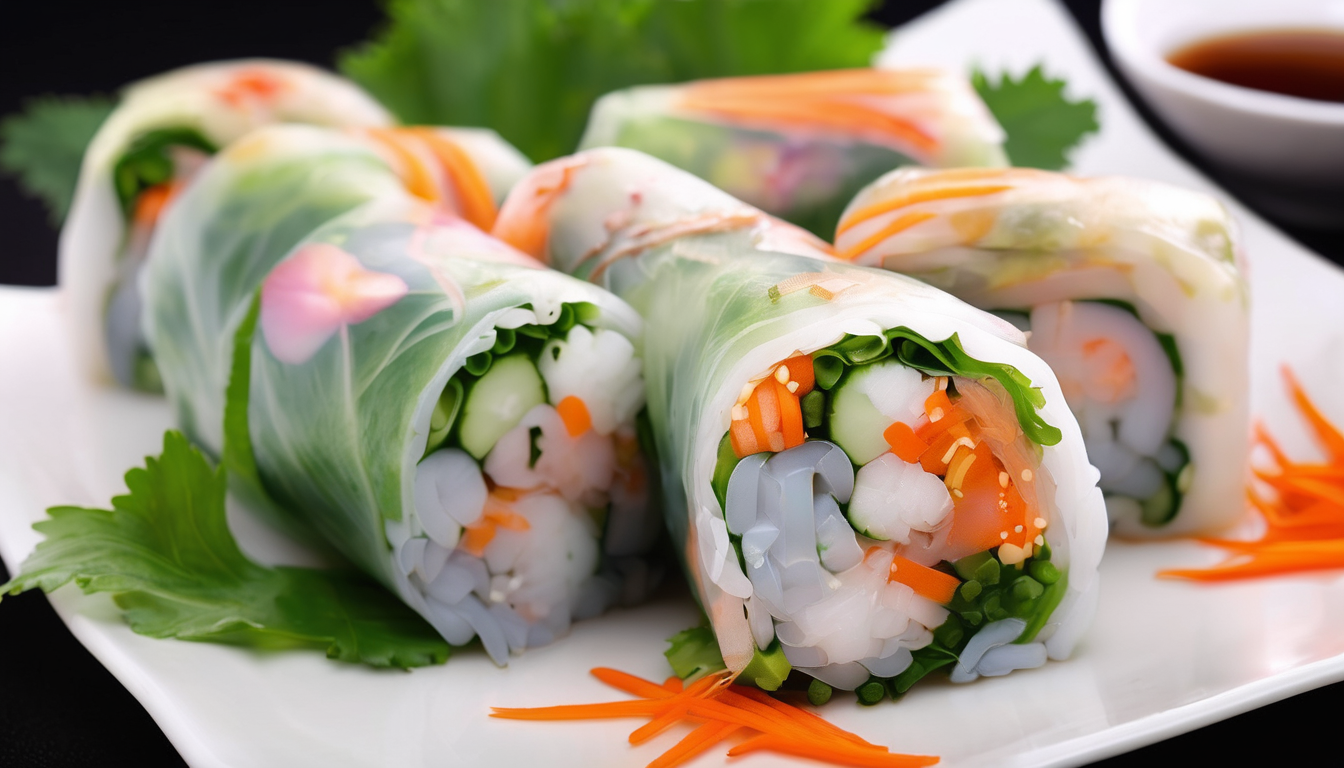
Ingredients and preparation
Summer rolls, also known as fresh spring rolls or gỏi cuốn in Vietnamese cuisine, are light, refreshing, and packed with vibrant flavors. They are typically made with rice paper wrappers filled with a combination of fresh vegetables, herbs, rice noodles, and protein such as shrimp, pork, or tofu. Below is a classic recipe for making traditional summer rolls at home.
Ingredients:
- 8–10 round rice paper wrappers (22 cm diameter)
- 100g rice vermicelli noodles
- 200g cooked shrimp, peeled and halved lengthwise
- 100g cooked pork loin, thinly sliced (optional)
- 1 medium carrot, julienned
- 1 small cucumber, julienned
- 1 cup shredded lettuce or mixed greens
- 1/2 cup fresh mint leaves
- 1/2 cup fresh Thai basil leaves
- 1/2 cup fresh cilantro leaves
- Warm water (for softening rice paper)
Preparation:
- Cook the rice vermicelli noodles according to the package instructions. Drain and rinse under cold water. Set aside.
- Prepare all the fillings: slice the shrimp and pork, julienne the vegetables, and wash and dry the herbs and greens.
- Fill a large shallow dish or pie plate with warm water. Dip one rice paper wrapper into the water for about 5–10 seconds until it softens slightly. Remove and lay it flat on a clean, damp kitchen towel or cutting board.
- In the lower third of the wrapper, place a small handful of rice noodles, followed by a few pieces of shrimp (pink side down for presentation), pork slices (if using), and a mix of vegetables and herbs.
- Fold the sides of the wrapper inward over the filling, then roll tightly from the bottom up, like a burrito. Repeat with the remaining wrappers and fillings.
Keep the finished rolls covered with a damp cloth to prevent them from drying out while you prepare the rest. Serve immediately with a dipping sauce such as hoisin-peanut sauce or nuoc cham (Vietnamese fish sauce dip).
Rolling techniques and tips
Mastering the rolling technique is key to creating summer rolls that are both visually appealing and easy to eat. Begin by ensuring your work surface is clean and slightly damp to prevent the rice paper from sticking. A wooden cutting board or a damp kitchen towel works well for this purpose.
When softening the rice paper, avoid over-soaking. Dip each sheet into warm water for just 5–10 seconds—enough to make it pliable but not too soft, as it will continue to soften as you assemble the roll. Lay the wrapper flat and work quickly to add the fillings before it becomes too sticky or fragile.
Layer the ingredients thoughtfully. Start with herbs and colorful vegetables at the bottom so they show through the translucent wrapper, creating an attractive presentation. Place the shrimp pink side down near the top third of the wrapper if you want them to be visible on the outside of the roll. This is a common technique used in Vietnamese restaurants for aesthetic appeal.
To roll, fold the sides of the wrapper inward over the filling to enclose the ends. Then, starting from the bottom edge closest to you, roll upward tightly but gently, keeping the ingredients compact without tearing the wrapper. If the wrapper tears, you can double-wrap the roll using a second sheet of rice paper.
For uniform rolls, try to use consistent amounts of each filling. Practice makes perfect, so don’t worry if your first few rolls are uneven. Keep a damp cloth over the finished rolls to maintain their moisture and prevent them from drying out. If you’re preparing them in advance, wrap each roll individually in plastic wrap and store in the refrigerator for up to a few hours before serving.
Serving suggestions and variations
Summer rolls are best enjoyed fresh and can be served as a light appetizer, a healthy lunch, or part of a larger meal. Arrange them on a platter with a variety of dipping sauces to suit different tastes. Classic accompaniments include hoisin-peanut sauce, nuoc cham (a tangy Vietnamese fish sauce dip), or a spicy chili-lime sauce. For a more interactive experience, consider setting up a DIY summer roll station where guests can assemble their own rolls with their choice of fillings and herbs.
To elevate the presentation, slice the rolls in half on a diagonal and arrange them upright on a serving plate so the colorful fillings are visible. Garnish with extra herbs, crushed peanuts, or thinly sliced chili for added flair. Serve with small bowls of dipping sauce and chopsticks or small tongs for easy handling.
Variations:
- Vegetarian: Replace shrimp and pork with marinated tofu, tempeh, or grilled mushrooms. Add avocado slices for creaminess.
- Seafood: Use poached scallops, crab meat, or smoked salmon for a different seafood twist.
- Fruit-forward: Add thin slices of mango, green apple, or pineapple for a sweet and tangy contrast to the savory fillings.
- Spicy: Include thin slices of jalapeño or a smear of sriracha inside the roll for a kick of heat.
- Fusion: Experiment with non-traditional ingredients like quinoa, roasted vegetables, or even grilled chicken with a Thai peanut slaw.
Summer rolls are incredibly versatile and can be adapted to suit seasonal ingredients or dietary preferences. Whether served as a starter or a main dish, they offer a refreshing and customizable option that’s perfect for warm weather dining or entertaining.